
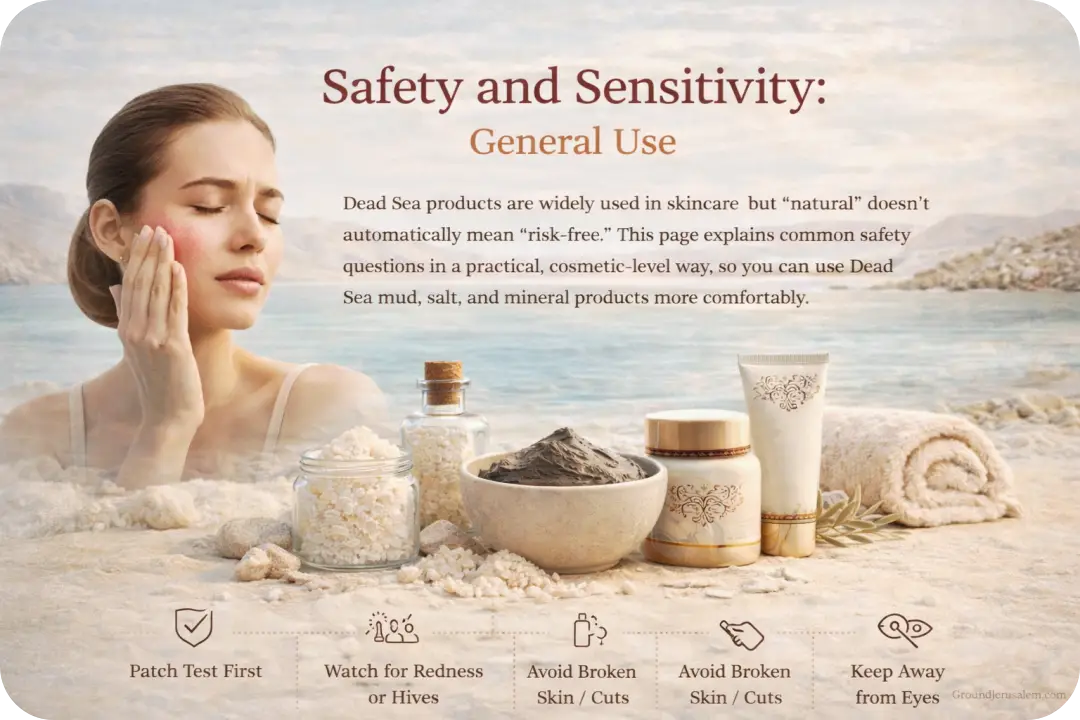
Dead Sea products are widely used in skincare, but “natural” doesn’t automatically mean “risk-free.” This page explains common safety questions in a practical, cosmetic-level way, so you can use Dead Sea mud, salt, and mineral products more comfortably.
Quick navigation
Are Dead Sea cosmetics generally safe to use?
Can Dead Sea products cause irritation or side effects?
Is a mild tingling sensation normal, and when is it not?
What should I do if a product burns or stings?
When should I stop using a Dead Sea product immediately?
How do I patch test a Dead Sea product correctly?
What should I do if I get redness, rash, or swelling after use?
Can I use Dead Sea products on broken skin or open cuts?
Can Dead Sea products be used around the eyes?
Are Dead Sea products safe for long-term use?
Are Dead Sea cosmetics generally safe to use?
For most people, yes. Dead Sea mud, salt, and mineral skincare products are widely used and are generally well tolerated when used as directed. Reactions are still possible, so it’s smart to start slowly and pay attention to how your skin responds.
Can Dead Sea products cause irritation or side effects?
Sometimes. You may notice temporary redness, dryness, or irritation, especially if you leave a mask on too long or overuse salt scrubs. Allergic-type reactions are uncommon but can happen, and sometimes the trigger is a fragrance or another added ingredient rather than the minerals themselves.
Is a mild tingling sensation normal, and when is it not?
A mild tingling or warming feeling can be normal with mineral-rich mud masks or salty products, especially during the first few uses. It should be brief and fade after rinsing. If it feels like burning, keeps getting worse, or leaves strong redness that doesn’t settle, treat it as irritation.
What should I do if a product burns or stings?
Rinse it off right away with cool or lukewarm water and stop using it for now. Don’t apply more active products to the area the same day. If the discomfort is intense or doesn’t improve, consider getting professional advice.
When should I stop using a Dead Sea product immediately?
Stop right away if you get burning, swelling, hives, blistering, or a rash that spreads. Also stop if you feel strong pain, or if redness and irritation keep increasing after you rinse. When in doubt, pause use and get guidance from a qualified professional.
How do I patch test a Dead Sea product correctly?
Apply a small amount to a discreet area like the inner forearm or behind the ear. Use it the same way you would normally (including rinsing if it’s a mask), then wait about 24 hours. If you see redness, itching, swelling, or a rash, don’t use it on larger areas.
What should I do if I get redness, rash, or swelling after use?
Stop using the product and gently rinse the area. Keep the routine simple until the skin calms down, and avoid scrubs, acids, or strong fragrances on that spot. If swelling, hives, or symptoms are significant or persistent, seek professional guidance.
Can I use Dead Sea products on broken skin or open cuts?
It’s better to avoid Dead Sea salt or mud on broken skin, open cuts, or raw irritation. Salt can sting and may make the area feel more irritated. Wait until the skin is intact, or use a gentler product and patch test first.
Can Dead Sea products be used around the eyes?
Avoid using Dead Sea salt or mud products on the eyelids or too close to the lash line. These products can sting if they get into the eyes. If accidental contact happens, rinse thoroughly with water.
Are Dead Sea products safe for long-term use?
For many people, yes, especially for gentle products like mineral creams or cleansers used as directed. If you notice ongoing dryness or irritation, reduce frequency or stop and reassess. Also follow storage instructions and don’t use products past their recommended shelf life.