
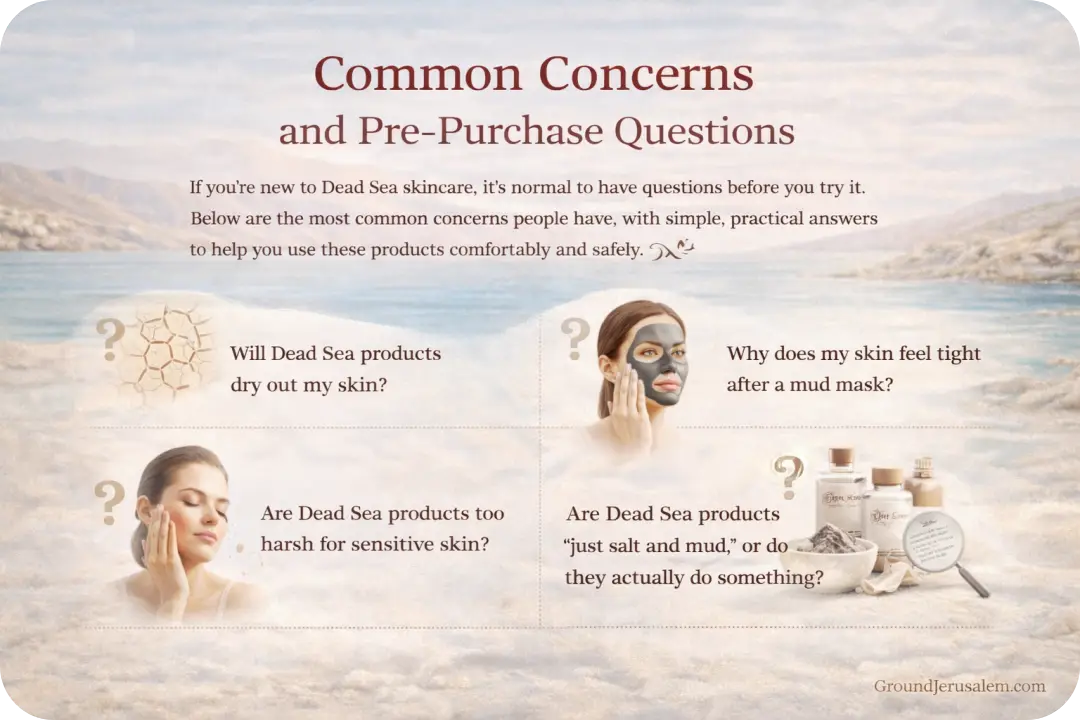
If you’re new to Dead Sea skincare, it’s normal to have questions before you try it. Below are the most common concerns people have, with simple, practical answers to help you use these products comfortably and safely.
Quick navigation
- Will Dead Sea products dry out my skin?
- Why does my skin feel tight after a mud mask?
- Is it normal for skin to feel slightly dry after a salt scrub or bath?
- Can Dead Sea products clog pores or cause breakouts?
- Can Dead Sea products make acne worse at first?
- Are Dead Sea products too harsh for sensitive skin?
- Do Dead Sea products have a strong smell, and is fragrance always added?
- Are Dead Sea products “just salt and mud,” or do they actually do something?
- Are results temporary, or do they build over time?
- How do I know if a product is authentic versus just “Dead Sea” branding?
Will Dead Sea products dry out my skin?
They can if you overuse strongly cleansing products like mud masks or salt scrubs. Rinse well, don’t leave masks on too long, and moisturize afterward. If your skin starts feeling tight or flaky, reduce frequency and switch to gentler mineral-based creams for a while.
Why does my skin feel tight after a mud mask?
Mud masks absorb oil and pull impurities from the surface, which can leave skin feeling “clean and tight.” This is common, especially if you let the mask dry fully. Rinse it off on time and apply a simple moisturizer right after.
Is it normal for skin to feel slightly dry after a salt scrub or bath?
Yes, it can happen because salt is exfoliating and can remove surface oils. Rinse off any salt residue and moisturize while your skin is still slightly damp. If dryness keeps happening, use less salt, shorten the soak, or do it less often.
Can Dead Sea products clog pores or cause breakouts?
Dead Sea mud and salt are often used to help remove excess oil and buildup, so they don’t usually clog pores on their own. Breakouts are more likely to come from added ingredients in a formula (like heavy oils or fragrance), or from using too many new products at once. Start with one product, use it a few times, and see how your skin responds.
Can Dead Sea products make acne worse at first?
Some people notice temporary bumps when they change routines or start deep-cleansing masks and exfoliants. This is often from irritation, overuse, or mixing too many active products. If breakouts increase, cut back on frequency, keep the routine simple, and stop if you see burning, swelling, or a rash.
Are Dead Sea products too harsh for sensitive skin?
Many people with sensitive skin use Dead Sea products comfortably, especially simple mineral creams. But mud and salt can feel intense if your skin is very reactive or compromised. Patch test first, start slowly, and avoid using salt or mud on broken or very irritated skin.
Do Dead Sea products have a strong smell, and is fragrance always added?
Pure Dead Sea mud can have an earthy, mineral smell, but it shouldn’t be overpowering. Some products add fragrance, and others keep formulas more minimal. If you’re sensitive, choose fragrance-free (or low-fragrance) options and always check the ingredient list.
Are Dead Sea products “just salt and mud,” or do they actually do something?
They really are made from salt, mud, and minerals, but the Dead Sea is known for an unusual mix of minerals. These ingredients are commonly used to cleanse, exfoliate, and support skin comfort and hydration. Results depend on your skin type, how often you use them, and the overall formula.
Are results temporary, or do they build over time?
Some results are immediate, like smoother skin after exfoliation or a “fresh” feel after a mask. Other benefits depend on consistent, gentle use over time, especially hydration and overall texture. If you overdo it, you may see dryness instead of improvement, so frequency matters.
How do I know if a product is authentic versus just “Dead Sea” branding?
Look for a clear ingredient list that actually includes Dead Sea salt, Dead Sea mud, or Dead Sea minerals (not just vague marketing language). Reputable products typically state where ingredients are sourced (the Dead Sea region is in Israel and Jordan). If details are missing, or the product doesn’t list any Dead Sea-derived ingredients, it may be “Dead Sea” in name only.