
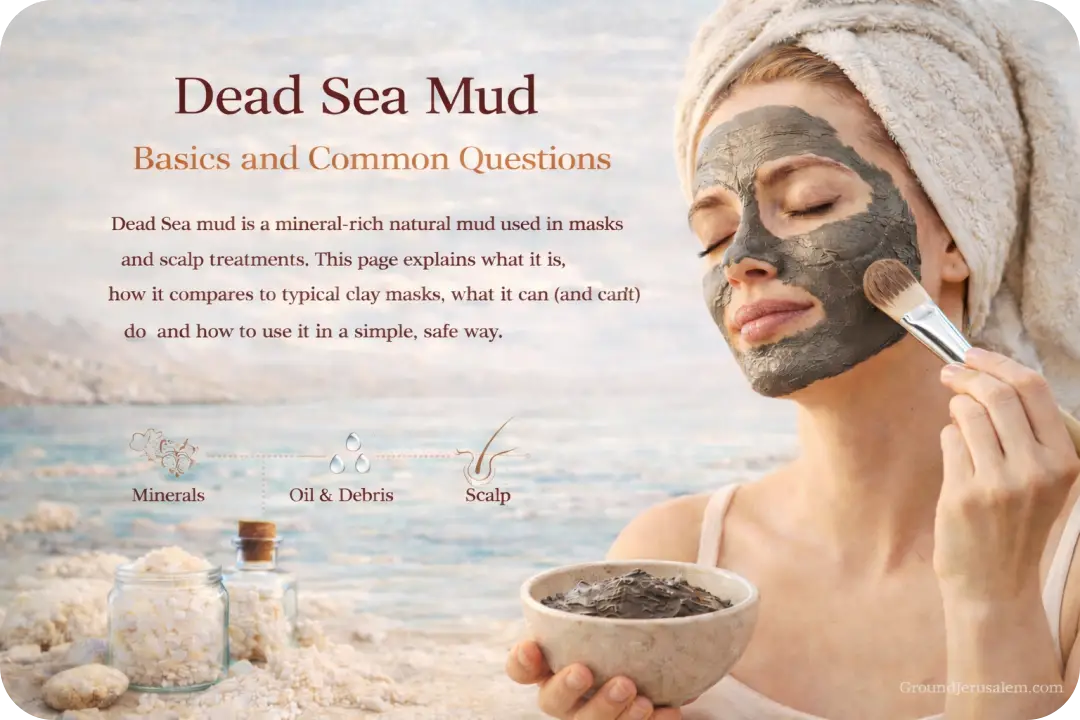
Dead Sea mud is a mineral-rich natural mud used in masks and scalp treatments. This page explains what it is, how it compares to typical clay masks, what it can (and can’t) do, and how to use it in a simple, safe way.
Quick navigation
- What is Dead Sea mud?
- How is Dead Sea mud different from regular clay masks?
- What does a Dead Sea mud mask do for pores and oil?
- Can Dead Sea mud help with acne-prone skin?
- Can Dead Sea mud help with dry, rough, or flaky skin?
- Can Dead Sea mud help with scalp issues like flaking?
- Is tingling or warmth normal when using a mud mask?
- Why does my skin feel tight after a mud mask?
- How long should I leave a Dead Sea mud mask on?
- How often should I use a Dead Sea mud mask?
What is Dead Sea mud?
Dead Sea mud is a natural mud rich in minerals from the Dead Sea. It’s often used as a mask because it helps lift away surface buildup and leaves skin feeling cleaner and smoother. Many formulas focus on a simple mix of mud and mineral salts, sometimes with added soothing ingredients.
How is Dead Sea mud different from regular clay masks?
Both mud and clay masks can absorb oil and help with the look of clogged pores, but Dead Sea mud is known for its mineral content. Compared with many classic clay masks, it’s often described as less harsh and more comfortable on skin that doesn’t like strong “drying” masks. Your experience still depends on the exact formula and how long you leave it on.
What does a Dead Sea mud mask do for pores and oil?
A Dead Sea mud mask can help absorb excess oil and lift away dirt and buildup from the skin’s surface. This can make pores look clearer and skin feel fresher after rinsing. It won’t permanently “shrink” pores, but it can improve how they look when oil and debris are reduced.
Can Dead Sea mud help with acne-prone skin?
It may be helpful for acne-prone skin because it can remove excess oil and surface impurities that contribute to congestion. Some research notes that Dead Sea mud can inhibit certain bacteria on the skin, but results vary and it’s not a medical treatment. If your skin becomes irritated, rinse it off and stop use.
Can Dead Sea mud help with dry, rough, or flaky skin?
It can help by gently loosening dead skin so rough areas feel smoother. At the same time, masks can feel drying as they set, so it’s best to rinse before it fully cracks and follow with a moisturizer. If you’re very dry or easily irritated, use it less often and keep the wear time shorter.
Can Dead Sea mud help with scalp issues like flaking?
Some people use Dead Sea mud on the scalp to help lift buildup and reduce the feel of oiliness and residue. It may help loosen flakes on the surface and leave the scalp feeling cleaner after a thorough rinse. Avoid using it on broken or very irritated scalp skin, and stop if stinging or redness persists.
Is tingling or warmth normal when using a mud mask?
A mild tingling or warmth can happen and is often linked to the mask drying and the skin feeling stimulated. It should stay mild and fade quickly after rinsing. If you feel burning, strong stinging, or lasting redness, rinse immediately and discontinue use.
Why does my skin feel tight after a mud mask?
Tightness is common because the mask absorbs oil and water as it dries. This “tight” feeling doesn’t always mean irritation, but it’s a sign your skin may need moisture afterward. Rinse, pat dry, and apply a simple moisturizer to restore comfort.
How long should I leave a Dead Sea mud mask on?
For most people, about 10–15 minutes is a practical range. Try to rinse before the mask becomes fully cracked and uncomfortable, especially if you’re dry or sensitive. Always follow the product directions, since different formulas can dry faster or slower.
How often should I use a Dead Sea mud mask?
Once a week is a common starting point for most skin types. Oily skin may tolerate up to twice weekly, while dry or sensitive skin may do better every 1–2 weeks. If you notice dryness or irritation, reduce frequency or wear time.